Chapter 1. The Electronic as Post-Optimal Object
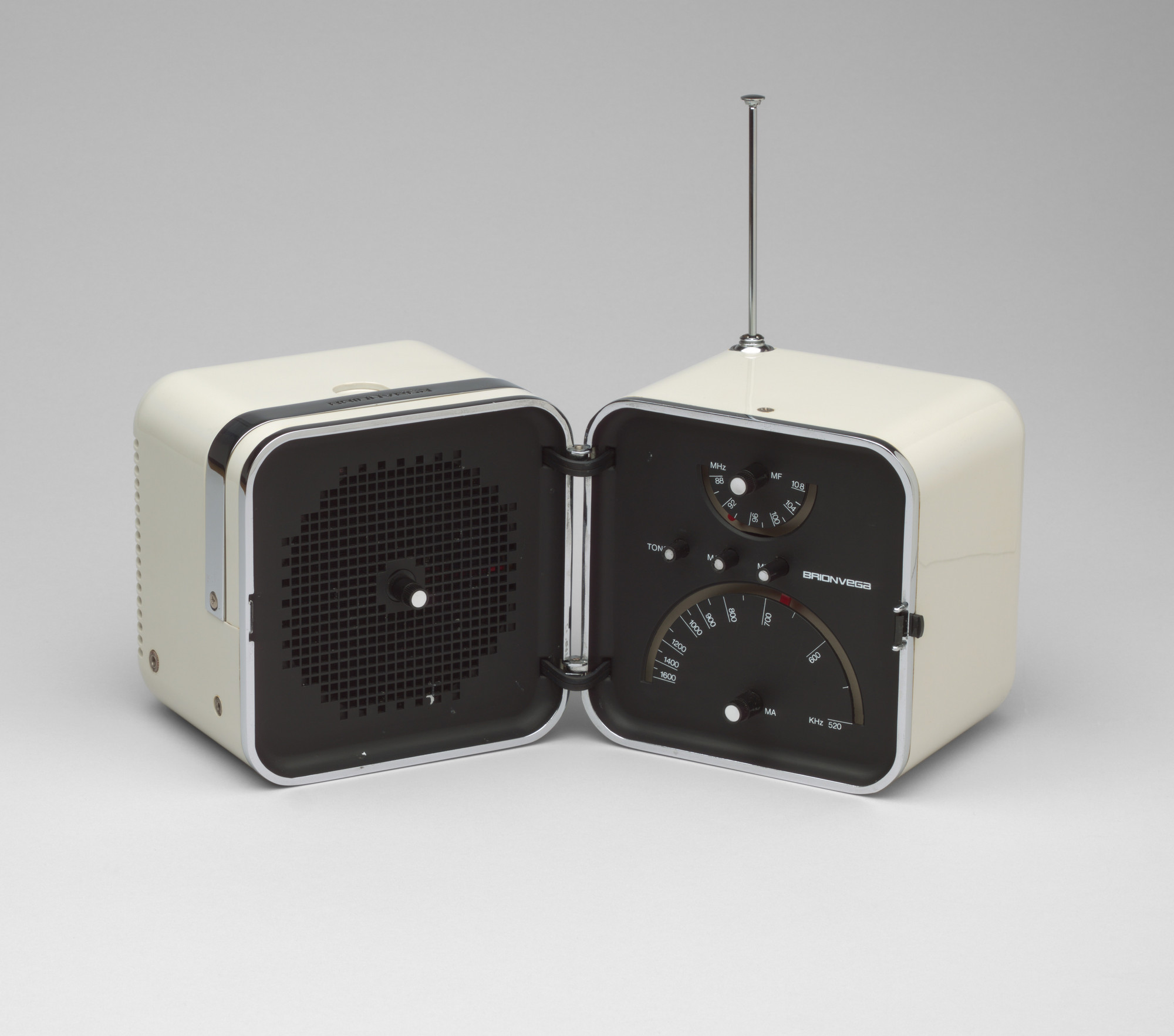
radio by Marco Zanuso
「電子物件因此在這物質文化世界中佔據一個奇怪的位置,更像洗衣粉和感冒藥,而不像傢具與建築,並且像所有的包裝設計(尤其是符號的)一樣受制於語言學派。電子物件失落在影像與物件之間,它的文化認同是根據技術的功能主義和符號學的關係來定義。」
"The electronic object accordingly occupies a strange place in the world of material culture, closer to washing powder and cough mixture than to furniture and architecture, and is subject to the same linguistic discipline as all package design, that of the sign. It is lost somewhere between image and object, and its cultural identity is defined in relation to technological functionalism and semiotics." p. 1
psychology of everyday things by Norman
「人因社群非常值得被批判,他們發展出一套電子物件的觀點,主要從電腦科學與認知心理學領域,在電腦工業中極端的有影響力;舉例來說,Don Norman 的設計心理學。」
"This is useful to critique the human factors "community," who have developed a view of the electronic object, derived from computer science and cognitive psychology, that is extremely influential in the computer industry; for example, Don Norman's (1988) The Psychology of Everyday Things." p. 2
「人因取徑的一個嚴重的問題,是它毫無批判的接受 Bernard Waites 所稱的美國意識形態,或技術在意識上的合法性: 所有問題不管是自然的、人類本能的、或文化的,皆可以視為技術問題,可以透過客觀知識的累積,理性的解決。......如此,技術在美國意識形態中,成為工具理性的化身,技術官僚統治者的工具。」
"A serious problem with the human factors approach though, in relation to this project, is its uncritical acceptance of what has been called by Bernard Waites (1989) the "American Ideology," or the ideological legitimation of technology: All problems whether of nature, human nature, or culture, are seen as "technical" problems capable of rational solution through the accumulation of objective knowledge, ..., so that technology, in the American Ideology, becomes "instrumental rationality" incarnate, the tools of technocracy." p. 2
「然而,對物質文化最豐富的反思,並不是來自人類學或社會學,而是來自那些關心日常物件詩意的文學。巴舍拉的空間詩學提供了一種深受心理分析影響的角度,強調粗糙傢具的詩意面向,例如衣櫥與衣櫃。谷崎潤一郎的陰翳禮讚研究日本物件關於陰影和黑暗的面向,以及電在欣賞時所形成的效果。」
"However, the most fruitful reflection on material culture is to be found, not in anthropology or sociology, but in literature concerned with the poetry of everyday objects. In The Poetics of Space, Gaston Bachelar (1969) offers an analysis, influenced by psychoanalysis, that emphasises the poetic dimension of humble furniture such as wardrobes and chests of drawers; Jun'ichiro Tanizaki's (1991) InPraise of Shadows considers the Japanese object in relation to shadow and darkness, and the effects of electricity on their appreciation;..." p. 5
「一旦這些原型要素受制於大量生產所要求的極端理性化過程,它們就被化約成抽象的、極端微小化的電子零件。基於物質的真相,它們的現代主義詩意,已經喪失了。」
"But once these prototype elements have been subjected to the extreme rationalization required by mass production, they become reduced to abstract ultra-miniaturized electronic components. Their modernist poetry, based on truth to materials, is lost." p. 7
「但一般來說,設計師探索新素材美學面向的努力,並不如工程師探索功能可能性的努力來得多。這領域中大部份的作品並不鼓勵詩意與文化的可能性,結合到實用性與技術性的面向。 結果就是產出一整串毫無想像力的提案。」
"But generally, designers have not exploited the aesthetic dimension of new materials with the same energy that engineers have exploited their functional possibilities. Most work in the area does not encourage poetic and cultural possibilities to converge with practical and technical ones. The outcome is a stream of unimaginative proposals." p. 9
marble answer machine by Durrell Bishop
「Durrell Bishop 的作品一個可能有意義的視野: 現存物件被當作實體圖像使用,資料的實體物質再現,同時指向被操作資料的實用面向與詩意面向。......雖然很實際的被應用,Bishop的思考與文化脈絡是接合的,而技術在其中被使用。一種"用的美學"湧現了。」
"The work of Durrell Bishop offers a vision of what this might mean: existing objects are used as physical icons, material representations of data that refer to both the pragmatic and poetic dimensions of the data being manipulated.... Although applied very practically, Bishop's thinking engages with the cultural context in which the technology is used. An "aesthetics of use" emerges." p. 17
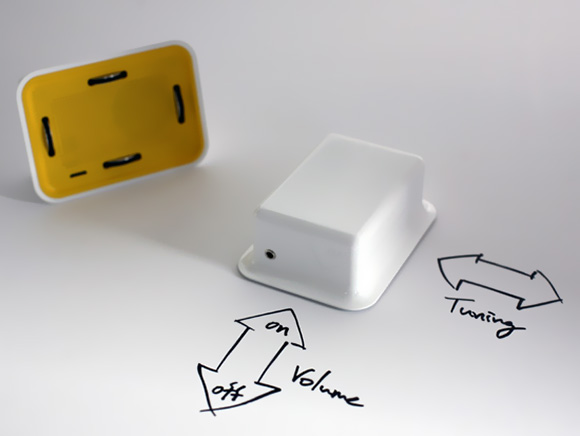
R1 radio by Chia Li-Gu
「電子物件設計師最困難挑戰,並不是技術與符號學的功能性,這些表現的優化程度都已經可以達成,而是在其他尚未被充分研究的領域: 形上學、詩學、以及美學。」
"The most difficult challenges for designers of electronic objects now lie not in technical and semiotic functionality, where optimal levels of performance are already attainable, but in the realms of metaphysics, poetry, and aesthetics, where little research has been carried out." p. 20
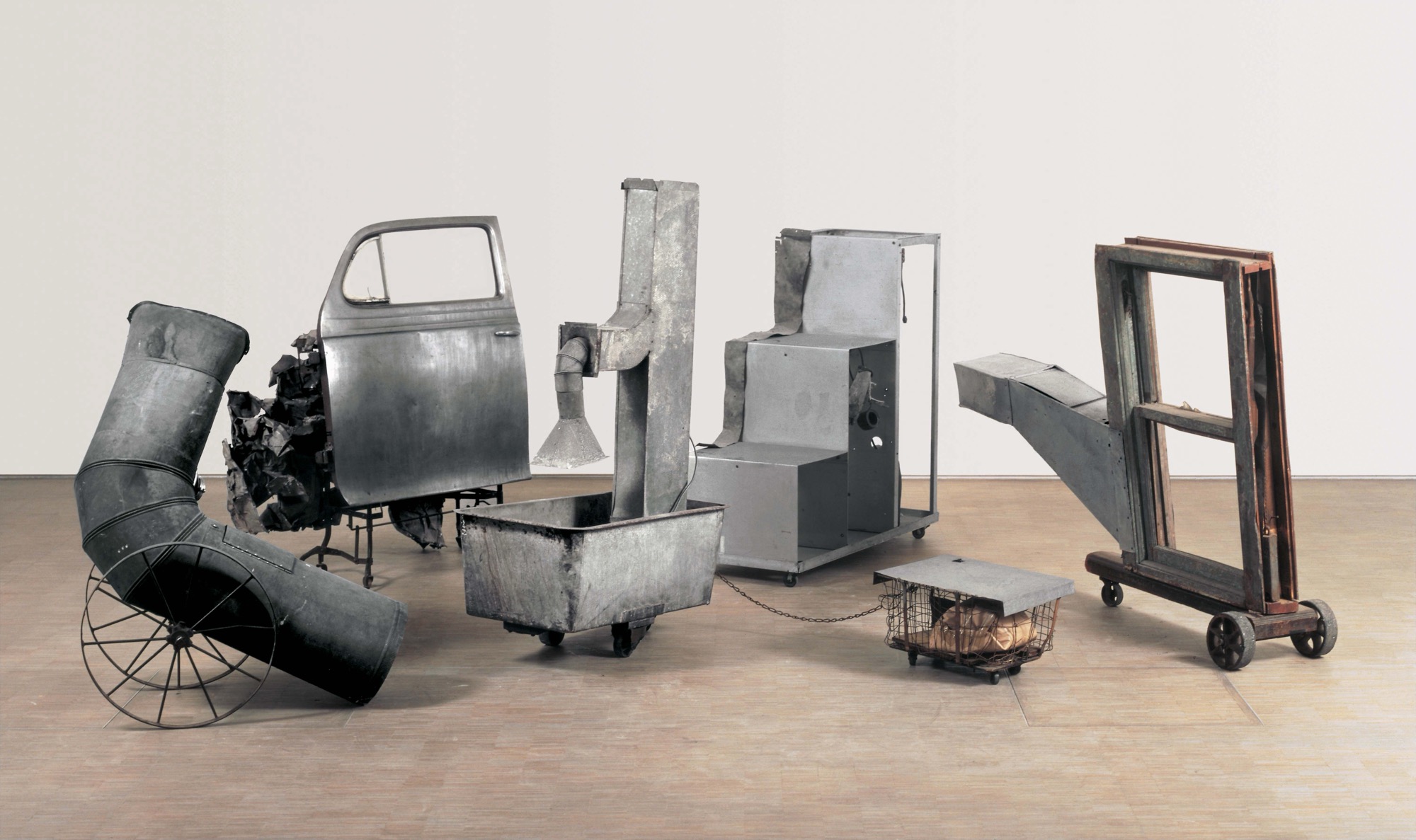
Oracle by Robert Rauschenberg
本書的立場是,設計研究應該為電子物件探索新的角色,促進更詩意的居住模式: 透過概念式產品整合美學經驗與日常生活的一種社會研究形式。在這個實用性與功能性被視為理所當然的世界中,後優化物件的美學能夠提供新的日常生活經驗,新的詩意面向。
"The position of this book is that design research should explore a new role for the electronic object, one that facilitates more poetic modes of habitation: a form of social research to integrate aesthetic experience with everyday life through "conceptual products." In a world where practicality and functionality can be taken for granted, the aesthetics of the post-optimal object could provide new experience of everyday life, new poetic dimensions." p. 20

.jpg)



沒有留言:
張貼留言