0. 文化探針,資料回收
資料詮釋參考步驟框架:
I. Selected Data (選取的資料)
II. Practice (實踐、日常活動、行動)
III. Meanings (意義、意涵)
IV. Interpretation, implications, speculation (themes) (詮釋、推測、主題、暗示)
1. Gaver, B., n.d. Designing for Homo Ludens, Still. pp. 163–178. (2002)
「「Homo Ludens」這一概念——將人類界定為具有遊戲性的存在(Johan Huizinga,1950)——可被視為對「科技應提供明確且高效率解決實務問題」這類假設的一種反思與解藥。
從這樣的觀點來看,人之所以為人,不僅在於思考能力或成就,更體現在其遊戲性之中:包括好奇心、對消遣的熱愛,以及不斷的探索、創造與驚奇感。一次在市中心漫無目的的散步、一瞬間的驚嘆、一段短暫的沉迷,或是一則玩笑——這些都是構成我們人性的關鍵面向,其價值絲毫不亞於規劃、邏輯或學習等活動。
因此,「遊戲」並非單純無意義的娛樂,而是一種與世界及自我互動並進行學習的根本方式——這一點對成人與兒童同樣重要。」
"The idea of Homo Ludens – humans defined as playful creatures (Huizinga, J., 1950) – is an antidote
to assumptions that technology should provide clear, efficient solutions to practical problems. From
this perspective, we are characterised not just by our thinking or achievements, but by our playfulness:
our curiosity, our love of diversion, our explorations, inventions and wonder. An aimless walk in
the city centre, a moment of awe, a short-lived obsession, a joke – all are defining and valuable
facets of our humanity, as worthy of respect as planning, logic or study. Play is not just mindless
entertainment, but an essential way of engaging with and learning about our world and ourselves —
for adults as well as children."
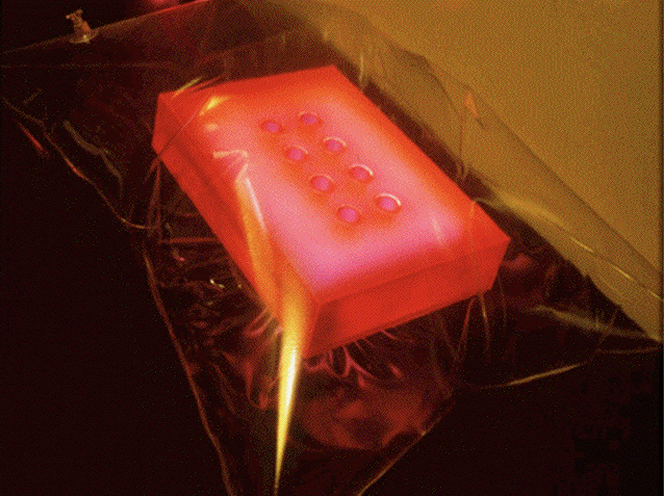
「The Pillow」並不僅僅是一件美學物件;它同時也是一種奇特的「收音機」,其光影會反映來自無線電台、行經的計程車,或附近嬰兒監視器所釋放的電磁訊號片段。更進一步而言,它不只是一台收音裝置,更是一個提出社會文化問題的媒介,揭示我們的居家空間,甚至身體本身,是如何被無線通訊所滲透。
透過包含「標語長椅」(Sloganbench)與「影像資料庫」(Imagebank)等可見元素,Projected Realities系統使路過的行人能以一種非說教、非強迫的方式,接觸到年長鄰居的文字與影像,而是在潛移默化中受到啟發與引導。
例如,「Dawn Chorus」(見圖5a)是一種餵鳥裝置,運用operant conditioning(操作制約)的原理,教導當地鳴禽學習新的旋律。
「(De)tour Guide」則是一種純音訊裝置,結合GPS與電子羅盤,引導人們在城市中行走——甚至刻意支持使用者在預設的一段時間內「迷路」。
「Intimate View camera」(見圖5b,後續發展為原型)讓分隔兩地的戀人得以捕捉並傳送極度放大的微小影像,藉此促成一種高度聚焦且親密的共享時刻。
「Dream Communicator」則允許遠距離的戀人透過聲音或語言,影響彼此的夢境。
最後,「Telegotchi」(見圖5c)是一種沒有按鈕的電子寵物,其「幸福感」依賴於心靈感應式的交流;而「Prayer Device」(見圖5d)則會設置於街頭,如同一種新型態的電話亭,等待將人們的聲音傳送至天空。
2. Ambiguity as a resource for design. (ACM CHI '03)
3. The drift table: designing for ludic engagement (ACM CHI2004)
"... ludic activities-that is, activities motivated by curiosity, exploration, and reflection rather than externally-defined tasks"
4. The history tablecloth: illuminating domestic activity (DIS06)
「Ludic design」並不僅僅關乎娛樂或一時興起的趣味,而是著重於提供各種資源,鼓勵人們進行探索、推想與漫遊,從而在潛在的嚴肅議題上發掘嶄新的觀點。」
"Ludic design is not just a matter of entertainment or whimsy, but focuses on providing resources that encourage people to explore, speculate and wander, finding new perspectives on potentially serious issues"
5.The prayer companion: openness and specificity, materiality and spirituality (ACM CHI10)

「我們觀察到一些片段顯示,參與者會利用這些裝置去反思「家」並非一個完全封閉的空間,而是一個受到季節影響的系統,同時也是一個其變化會因自身行動與存在而被共同塑造的場域——此外,也出現了一些帶有遊戲性的想像,例如關於鬼魂、祕密與夜行生物的聯想。
儘管這些現象展現了將環境議題與趣味式人機互動(ludic HCI)交織的潛力,但至少對我們部分研究者而言(以及部分參與者的感受),這些裝置本身仍顯得略有不足。」
"We had glimpses of participants using thestations to reflect on the home as ‘not hermetically sealed’,as a system influenced by seasons, and as a space wheretheir movements and presence contributed to the collectedchanges – and we also had playful reflections on ghosts,secrets and night-time creatures. Although this speaks tothe potential for intertwining environmental and ludic HCI,at least some of us feel, like our participants, that thestations are somewhat lacking."
7. WHAT IS LUDIC ABOUT LUDIC DESIGN? A BACK AND FORTH BETWEEN THEORY AND PRACTICE(2015)
ludic design 三個特徵: 非典型性(unconventionality)、巧遇性(serendipity)與反身性(reflexivity)
(1) 非典型性(unconventionality)
「Donald Norman指出,在高效率的設計中,「可供性」與「慣例」具有關鍵的重要性(Norman, 2002)。相對而言,Bill Gaver的理論立場則認為,設計師的角色在於不斷挑戰既有的慣例——無論是美學、政治或社會層面的規範。」
"Bill Norman describes the importance of affordance and conventions in efficient design (Norman, 2002). On the contrary, Bill Gaver theoretical stance is that designers always challenge conventions: aesthetic, political and social conventions."
(2)巧遇性(serendipity)
「雖然「serendipity」一詞常被理解為「偶然」,但Horace Walpole在1857年所提出的較為曖昧的定義——「在未刻意尋找之下,憑藉偶然與洞察力而發現事物」——其實更強調其中的「洞察力」。也就是說,關鍵在於個體是否能留意到突如其來的事件、正確詮釋其意義,並且——對設計而言更為重要的是——能進一步將這些發現轉化並加以運用。」
"While the word “serendipity” is often used to mean chance, the ambiguous definition given by Walpole: “making discoveries, by accidents and sagacity, of things which [you] were not in quest of” (Walpole, 1857) points more to the “sagacity” of characters who are able to pay attention to a surprising event, to interpret it correctly, and - more importantly for design - to work something with it."
(3)反身性(reflexivity)
「breaching experiments」(違反實驗)一詞由Harold Garfinkel在民族方法學中提出(Garfinkel, 1991),指的是由研究者刻意設計的實驗,旨在更深入理解人們如何以極為細緻的方式彼此調適,以及回應各種情境。所謂「違反實驗」,即是透過擾動日常生活中的既定情境,從而揭示其背後的意義——這些意義往往隱藏在「理所當然」或「自然如此」的表象之下。
此一概念與方法亦被工程領域的研究者採用,用以觀察測試者在面對新科技時的反應。……事實上,違反實驗首先有益於使用者自身,其次也有助於設計與人機互動團隊。由於遊戲式設計引入了非典型媒介與偶然性,參與者會被引導去操作、詮釋並討論這些人工物的意義;使用者的反應不僅能修正既有的詮釋,也能擴展物件的意涵。同時,這些成果亦有助於設計師發展新的互動系統。」
"Breaching experiments", as Harold Garfinkel defines them in ethnomethodology (Garfinkel, 1991), are experiments - designed by researchers - to better understand how people adjust to each other and to circumstances in very elaborate ways. A “breaching experiment” disturbs situations of everyday life so as to get to some of its meaning, a meaning that is hidden under the guise of “naturalness”, or of “obviousness”. This concept and method have also been used by researchers in engineering to focus on the reactions of testers to a new technology. ...the breaching experiment is actually for the benefit, first of the users themselves, and for the design and HCI team. Because ludic design introduces non conventional media and serendipity, the participants are led to manipulate and discuss the meaning of the artifacts. The user’s reactions are both to correct and expand the meaning of the object. The benefit also goes to designers who want to develop new interactive systems."
參考文獻:


沒有留言:
張貼留言